Chianti Wine Tours from Florence & Siena: The Complete Guide
The black rooster, the Sangiovese hills, the stone villages strung along the SR222. Chianti is the most accessible and most loved of all Tuscan wine trips — here's how to do it well.
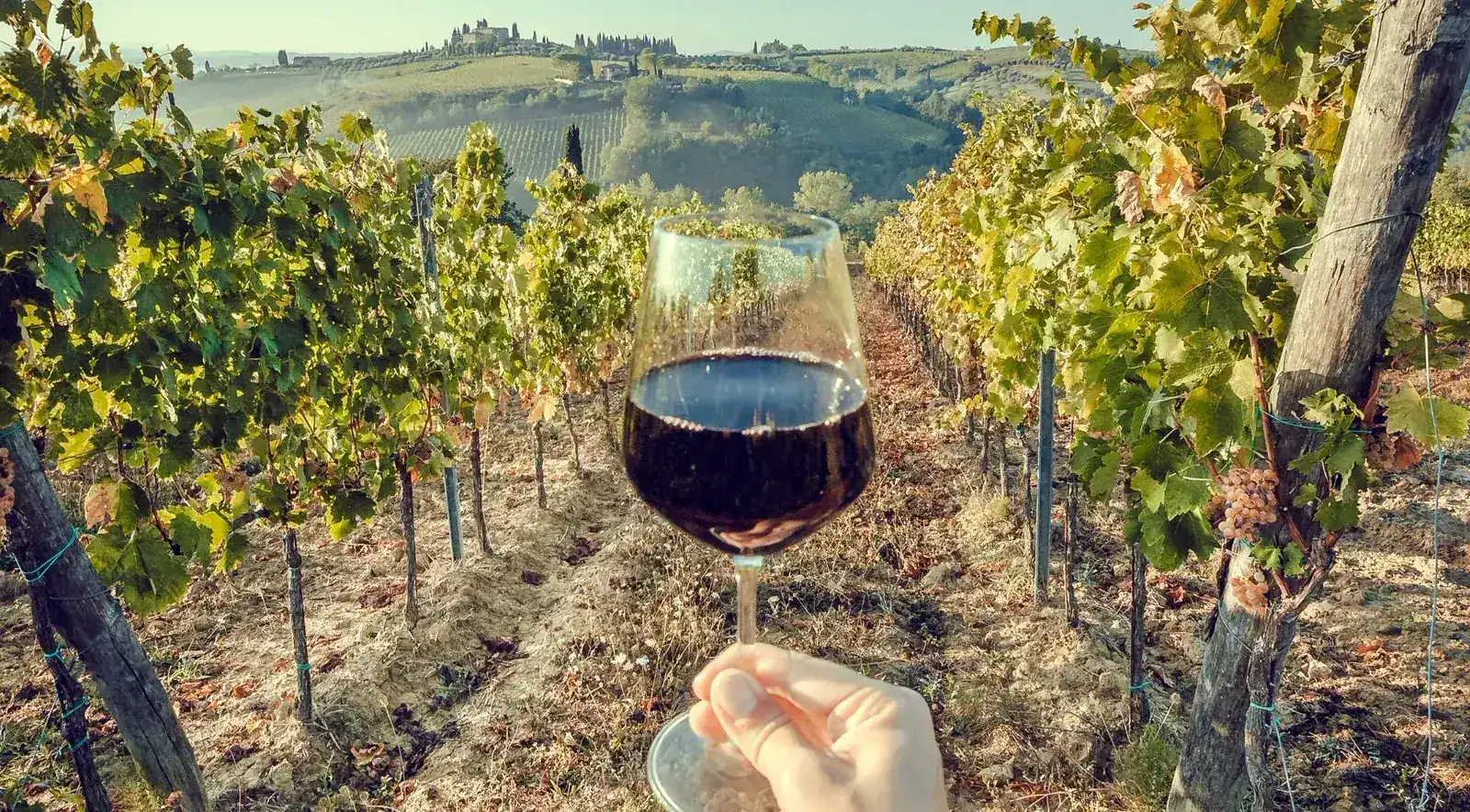
Chianti Classico between Greve and Castellina — the heartland most Chianti wine tours visit.
This guide covers both sides of the Chianti trip: the practical part (which city to leave from, what tours cost, which wineries to visit) and the part that makes you sound like you know what you're drinking (what Chianti Classico actually is, and why the black rooster on the bottle matters). Skim to what you need.
Check availability — Florence: Chianti Wineries Tour with Wine Tasting
Pоwered by
Where most people start
Chianti is where most people start — and many never need to go further. It's the closest wine region to Florence, the most scenic, and the easiest to taste your way through in a single relaxed day.
What is Chianti, and Chianti Classico?
Chianti is a Sangiovese-based red from the hills between Florence and Siena. But there's a distinction to grasp before you book, because it shapes where you'll go and what you'll drink.
Chianti DOCG is the large, outer designation covering a wide swathe of Tuscany. Chianti Classico DOCG is the original historic heartland at the centre — a smaller, higher-quality zone with stricter rules. It's the Classico zone that the famous wine route runs through, and the one wine tours actually visit.
You'll spot Chianti Classico by the Gallo Nero — the black rooster — on the neck of the bottle. The seal traces back to a medieval rivalry between Florence and Siena, and today it's the mark that the wine comes from the historic zone and meets its standards.
Within Chianti Classico there are three quality tiers, in ascending order:
Annata — the standard, "vintage" Chianti Classico.
Riserva — aged longer before release.
Gran Selezione — the top tier, from the best estate fruit.
Gran Selezione has increasingly emphasised estate-controlled grapes and geographic origin rather than simply longer ageing. The denomination now recognises 11 UGAs — Additional Geographical Units — which identify places such as Panzano, Greve, Radda and Castellina more precisely on the label. For anyone beyond their first tasting, UGA-labelled wines are the best reason to try the same category from more than one part of Chianti: it is the clearest way to taste how the ground changes the wine.
Chianti vs Brunello? Both are Sangiovese, but Chianti is generally lighter, brighter, and food-friendly, while Brunello di Montalcino — from a single town further south — is bigger, longer-aged, and pricier. Chianti is the everyday joy; Brunello is the special occasion. (Our Tuscany wine tours guide compares all the regions, and our Tuscan wine explained guide covers the grapes and DOCG rules in full.)
Other experiences you might enjoy
Worth adding to your itinerary
If Chianti has you hooked, Tuscany's other wine regions are all within easy reach. Pair this trip with a Brunello di Montalcino pilgrimage, the white Vernaccia and medieval towers of San Gimignano, or the coastal Super Tuscans of Bolgheri — or browse the full regional roundup in our best wineries to visit in Tuscany guide. The widget below surfaces live availability for related Chianti and Tuscany experiences.
Florence or Siena: where to leave from
Most Chianti tours run from one of two cities, and the choice is mostly about where you're already staying.
From Florence The default
30–60 min to the Classico zone · the most tours, widest choice
The Chianti Classico zone begins about 30–60 minutes south. Florence has by far the most tours, the widest choice of formats, and the easiest logistics. If you're not sure, depart from here. See our full guide to wine tours from Florence →
From Siena The quicker hop
20–40 min to the southern villages · fewer tours, closer in
Siena borders the southern edge of the Classico zone, so you can be in the vines in 20–40 minutes. Fewer tours run from Siena, but it's the quicker hop and ideal if you're basing yourself in the south.
Either city works for a half-day or full-day trip. Florence wins on choice; Siena wins on proximity to the southern villages like Castellina, Radda, and Gaiole.
The practical rule is to stay in your own half of the zone. From Florence, focus on Greve, Panzano and San Casciano.From Siena, focus on Castellina, Gaiole and Castelnuovo Berardenga. Don't waste half the day crossing the entire denomination just to reach a name you happen to recognise. The wine does not get better in proportion to the driving.
Tour, bus, car or driver
Getting from Florence to Chianti
Getting from Florence to Chianti is easy. Getting to several wineries while everyone drinks requires more planning, which is the whole problem a tour solves.
The classic route heads south toward Greve → Panzano → Castellina, along the SR222 Chiantigiana, the famous road through this landscape. For a first day, Greve and Panzano are enough.
How you travel
Best for
The catch
Organised tour
Wine — it solves the driver, the appointments, the parking and the timing all at once
Fixed itinerary. Pick your format from the table below
Public bus
Greve and Panzano — the town, lunch, an enoteca
Poor for multiple rural wineries; the estates are not on a bus route
Rental car
The SR222 road trip, if one person genuinely is not drinking
Someone stays sober all day, and tastings need booking ahead
Private driver / NCC
Groups, specific estates, honeymoons, wine enthusiasts
The most expensive option per day
Driver only
Experienced wine travellers who already know which producers they want and will book the tastings themselves
No guide, and the appointments are entirely your job
Taxi
One point-to-point trip
Not viable for an entire multi-stop wine day
Public bus Cheapest independent day
Regional buses connect Florence with Greve and Panzano. Excellent for the town, lunch and an enoteca tasting. Poor for reaching several rural wineries in a day. That is simply not what the network is for.
Rental car One sober driver
Excellent for the SR222 if one person is not drinking. One practical warning: do not collect a rental car only to keep it parked in central Florence. Pick it up on the day you leave the city. Compare touring with driving →
Private driver / NCC Maximum freedom
Best for groups, specific estates, honeymoons and wine enthusiasts who already know which producers they want. Driver-only is the cheaper variant of the same idea: a driver plus your own direct winery reservations is often enough for experienced wine travellers and collectors, who would rather choose the estates than be shown them. See private options →
Taxi One hop only
Fine for a single point-to-point trip — into Greve for lunch, say. It is not a sensible way to run an entire multi-stop wine day.
Greve or Panzano first?
Greve is easier and more practical — the bigger town, the better bus service, the obvious first stop. Panzano is more wine-focused. If you have a full day, visit both; they are minutes apart on the same road.
Morning or afternoon?
Morning is excellent in summer, when the heat builds through the day. Afternoon works well after a morning of Florence sightseeing, and gives you softer vineyard light in spring and autumn.
Where should a tour actually go?
From Florence, the natural section of Chianti is San Casciano, Greve, Panzano and sometimes Castellina. There is no need to reach Radda or Gaiole on a short trip unless the itinerary has a specific reason to — see the note on staying in your own half of the zone above.
The Chianti wine route & its towns
The classic drive is the SR222 — the "Chiantigiana" — winding from Florence to Siena through the heart of the Classico zone. The villages along it are part of the pleasure:
A hilltop village known for its butcher and panoramic vineyard views. The pick for a genuinely wine-focused day, and one of the 11 named UGAs, so the label tells you where you stood.
Castellina in Chianti Etruscan past
A fortified medieval town with an Etruscan past and a covered walkway along its old walls. Ideal if you are travelling the Florence-to-Siena route rather than returning the way you came.
Radda in Chianti Chianti League
One of the historic centres of the Chianti League, small and atmospheric. The best overnight base in Chianti if you want to wake up in the vines rather than drive back to a city.
Gaiole in Chianti Castle country
Surrounded by castles and some of the region's most celebrated estates. The strongest base for historic estates — Brolio and Badia a Coltibuono are both here.
A typical tour doesn't try to see all of them — it picks one or two villages and pairs them with winery visits, so the day stays relaxed rather than a checklist. For the full nine-town rundown, the SR222 route itself and one- and two-day driving itineraries, see our Chianti wine region guide.
Best Chianti wineries to visit
Chianti has everything from grand historic castles to tiny family cellars — including the four estates that dominate any argument about the most beautiful winery in Tuscany. (For estates in every other Tuscan region, see our best wineries to visit in Tuscany guide.) A few things to know before you pick:
The famous estates require appointments, often days or weeks ahead in peak season. They are not drop-in cellar doors.
Tasting fees at well-known estates typically run from around $20 up to $40+ per person for standard flights, more for reserve tastings — separate from any tour cost.
Castles and family estates offer different days. A historic estate impresses with cellars and scale; a small family producer often gives the warmer, more personal welcome.
Olive oil is part of the story here. Many Chianti estates produce excellent extra-virgin olive oil and pour it alongside the wine — a Chianti-specific bonus to look for.
The rule that matters
The best Chianti winery day is not about collecting famous names. It is about seeing how different producers interpret the same historic territory. For a first visit, choose two contrasting wineries: one historic or architectural estate, and one smaller, wine-focused producer.
The seven estates worth building a day around
Winery
Area
Best for
Antinori nel Chianti Classico
San Casciano / Bargino
Architecture
Castello di Verrazzano
Greve
Classic estate + food
Fontodi
Panzano
Serious wine lovers
Castello di Ama
Gaiole
Wine + art
Castello di Brolio
Gaiole
History
Badia a Coltibuono
Gaiole
Historic atmosphere
Castello di Fonterutoli / Mazzei
Castellina
Historic producer
Antinori nel Chianti Classico Architecture
Choose Antinori when architecture and wine matter equally. The modern winery is built into the hillside and gives a highly polished introduction to the region. Ideal for first-time visitors, but because it is such a destination, reserve ahead. Book directly with the estate; it isn't sold as a group tour. Our guide to wineries near Florence compares it with the other estates close to the city. If you want something bookable in the same San Casciano corner, Terre di Perseto: guided tasting & winery tour — $34 · 4.84★ (31 reviews) →
Castello di Verrazzano Classic estate + food
Near Greve, Verrazzano is a strong all-rounder: historic estate atmosphere, vineyard landscape and food-friendly tasting formats in one place. It works particularly well as a first Chianti day from Florence. Book direct — the coach tours that pass through Greve do not include it.
Fontodi Serious wine lovers
Fontodi sits in the Panzano area and is a better fit for wine-focused visitors than for travellers wanting a generic sightseeing stop. Pair it with a more historic estate and you have an excellent two-winery day.
Castello di Ama Wine + art
Distinctive for its integration of contemporary art into a major wine estate. Particularly good for couples, design-minded travellers, and anyone who wants a slower premium visit rather than a brisk cellar walk.
Castello di Brolio History
One of the classic places to connect Chianti with its own history. The castle and the Ricasoli name make it especially attractive for travellers who want more than a tasting. This is where the Chianti formula was written.
Badia a Coltibuono Historic atmosphere
Combines wine with a strong historic setting, a former abbey rather than a castle. Well suited to a food-and-wine itinerary, and to travellers exploring the Gaiole side of Chianti.
Fonterutoli / Mazzei Historic producer
Near Castellina, Fonterutoli is a useful choice for people entering Chianti from Siena, or combining a tasting with time in Castellina itself. Our Castellina in Chianti guide covers Fonterutoli and the other estates around the town.
How many wineries should you visit?
Two. A good Chianti day is a morning winery, lunch, an afternoon winery, and one village. That's enough. A third estate makes the day longer instead of better, and it is usually the village that gets cut.
None of the seven estates above sells tickets through GetYourGuide — they take direct bookings only, which is exactly why a guided day helps. The tours below visit working Chianti Classico family estates that do accept group bookings.
A guided tour helps by matching you to estates that suit your taste and securing the bookings, including doors that don't take walk-ins. The two most-booked Chianti tours from Florence are below; a Siena-based option follows further down.
One of the most-reviewed Chianti tours from Florence — a half-day to two family wineries in Chianti Classico, Sangiovese tastings paired with pecorino, bread and estate olive oil, back at the meeting point by mid-afternoon. The decisive first Chianti day.
Half-day from Florence into the rolling Chianti hills
From Florence: Chianti Half-Day Wine Tour with Tasting
From $62·4.55★ (3,419 reviews) ·6 hours·Free cancel · 24h
A second half-day option for travellers who want to be back in central Florence by early afternoon. Two Chianti wineries, a guided cellar walk and a flight of wines at each — leaving more of the day free for the Duomo or the Uffizi.
Two tastings at two different wineries — eight wines
Tuscan oil, balsamic vinegar and snacks (salami, bread)
Ask for the flight in this order and the day teaches you something. Ask at random and it is just five glasses of red.
Chianti Classico
The Annata baseline — the reference point everything after it is measured against.
Chianti Classico Riserva
Longer ageing before release; the first real step up inside the same house style.
Chianti Classico Gran Selezione
The top tier, from estate-controlled fruit, and increasingly labelled with its UGA, so you can taste Panzano against Radda.
An estate IGT wine
Where the producer works outside the appellation rules. Often the most revealing pour of the visit.
Vin Santo, if offered
The traditional sweet finish, usually with cantucci. Ask. It is not always poured by default.
That gives you an intelligible progression instead of a random sequence, and it is the single easiest way to get more out of a tasting you have already paid for.
What it costs in 2026
Chianti tours are usually the most affordable Tuscan wine tours, thanks to the short drive. 2026 ranges:
Tour type
Price
What you get
Half-day small group
$60–110 pp
1–2 wineries, tasting, often olive oil
Full-day small group
$85–150 pp
2 wineries + lunch, a village stop
Large group / coach
$55–90 pp
1–2 wineries, lighter tasting
Private Chianti tour
$600–900 / group
Your party, custom pace and stops
Cellar-door tasting fee
$20–40+ pp
At the winery, separate from tour cost
Indicative 2026 ranges across operators and platforms. Private prices are usually quoted per group, so per-person cost falls as your party grows. Confirm whether lunch and tasting fees are included before comparing.
The most flexible Tuscan region
Types of Chianti tour
There is no single "best Chianti wine tour." The right one depends on whether you care most about wine, food, villages, convenience or privacy. For most first-time visitors the winner is a small-group full-day tour with two wineries and lunch, but here is the whole field, with what to book for each.
A good half-day tour runs around 4.5–6 hours, and is the right pick for a 2–3 night Florence trip, when city sightseeing is still the priority. A strong one should visit two wineries and avoid excessive sightseeing detours — if the itinerary lists three towns, it is a sightseeing trip with a tasting attached.
Small-group tour The easiest recommendation
This is the easiest recommendation, for five reasons: fewer guests, easier winery access, more conversation, less waiting, and a better chance of visiting smaller producers. Two wineries are usually enough.
Full day with lunch If food matters
Choose this if food matters. A long winery lunch turns the tasting into a cultural experience instead of a sequence of pours. Look for two wineries, a proper lunch, Chianti Classico, and one village at most.
Chianti + San Gimignano Wine and a famous town
Best for visitors who want a major Tuscan town as well as wine. The trade-off is simple: every hour in San Gimignano is an hour not spent at a winery. This is a great Tuscany day tour, not the deepest possible Chianti wine tour.
Private tour From four people
Worth considering when you are four or more people, want specific estates, everyone wants to drink, you want a long lunch, you are buying seriously as a collector, or you simply dislike group tours. Compare private options →
Large coach Budget
Large coach tours provide excellent value for people who want scenery and an introduction to wine. They are less suitable for travellers expecting intimate producer conversations.
Self-drive One sober driver
Excellent when one person genuinely does not drink. Use the SR222 through Greve, Panzano and Castellina, visit two wineries and stop for lunch. Nothing to book here. The route is in our Chianti wine region guide.
What should be included?
A strong tour listing specifies all seven of these. If it is vague on any, ask before booking:
Transportation
Actual winery visits (not just "a tasting")
Tasting fees
Chianti Classico, if that is your goal
Food and lunch details
Group size
Meeting point
Red flags
"Tuscany wine tour" that never names the region you'll actually visit
An itinerary with four towns and one winery
"Lunch" that turns out to mean snacks
A product that sells the number of wines instead of the quality of the experience
Best for…
Beginners
Small-group Chianti with two wineries.
Wine lovers
A private driver, or a specialist small group with two strong producers.
Couples
One winery, a long lunch, then a second shorter tasting.
Solo travellers
Small group — you'll actually talk to someone.
Chianti's proximity also makes it the most flexible Tuscan region for novelty formats: wine paired with estate olive oil, lunch inside a castle, vintage car, Vespa and e-bike routes between estates, and late-afternoon sunset tastings timed for golden light over the vines.
And if you're based in Siena instead of Florence, this castle-estate day is the equivalent — picked up centrally, lunch inside a medieval castle.
From Siena / GetYourGuide
From Siena: Chianti and Castles Tour with Wine Tastings
From $96·4.56★ (821 reviews) ·5 hours·Free cancel · 24h
The premium option if you're based in Siena instead of Florence — central pickup, then Chianti through two medieval castle estates (rare access; most Chianti tours skip the fortified architecture entirely). Lunch is served inside the castle.
Breathtaking Chianti landscapes by minivan
Ancient churches, medieval castles, small villages
May, June, September, and October are ideal — warm, with the vineyards lush or turning gold. September brings the vendemmia (harvest), the most atmospheric and busiest time. July and August are hot and crowded; mornings are best. Winter is quiet and cellar-cosy with lower prices. Because Chianti is the most popular region, book ahead in peak season — small-group and private tours fill first.
Our recommendation
For a first Chianti day, combine one famous estate with one smaller producer, and keep the whole day inside one geographic section of Chianti. That gives you history, landscape and a genuine producer comparison — without spending half of it in a vehicle.
The harvest runs longer than a single week, and September is busier than its shoulder-season reputation suggests. Our best time to visit Tuscany for wine guide sets the vendemmia calendar against the Florence station’s 1991–2020 rainfall normals and Tuscany’s monthly visitor numbers, month by month.
Frequently asked, Chianti wine tours
Is Chianti worth visiting?
Very much so. It's the most accessible Tuscan wine region — close to both Florence and Siena, strikingly scenic, and home to the famous Chianti Classico reds and charming medieval villages. For most first-time visitors it's the ideal wine day out.
How do you get to Chianti from Florence?
The Chianti Classico zone starts about 30–60 minutes south of Florence. Most visitors go by guided tour (minivan or coach), which handles transport and winery bookings. Self-driving is possible but needs a designated sober driver and pre-booked tastings. See our wine tours from Florence guide for the full picture.
What is Chianti Classico?
Chianti Classico is the original historic heartland of the Chianti region, between Florence and Siena — a smaller, higher-quality DOCG zone with stricter rules than the broader Chianti designation. It's marked by the black rooster (Gallo Nero) seal on the bottle.
What's the difference between Chianti and Chianti Classico?
Chianti DOCG is a large outer area; Chianti Classico DOCG is the smaller historic core at the centre, with tighter rules and generally higher quality. Wine tours visit the Classico zone, and its wines carry the black rooster seal.
What is the best winery in Chianti?
There is no single answer. Antinori nel Chianti Classico is best for architecture, Castello di Brolio for history, Fontodi for a serious wine focus, and Castello di Verrazzano for an accessible all-round experience. Pick by what you want from the day instead of by fame.
Do I need reservations for Chianti wineries?
Yes, for any winery you would build a trip around. The well-known Chianti Classico estates are appointment-only and are routinely turned away walk-ins in season. Book direct, or take a guided tour where the operator already holds the slots.
Which is the best town in Chianti?
Greve in Chianti is the most popular gateway town; Castellina and Radda are atmospheric medieval centres; Gaiole is ringed by famous estates. Most tours pair one or two villages with winery visits instead of touring them all.
Can you do Chianti without a car?
Yes. Guided tours from Florence or Siena handle all transport, so no one has to drive or stay sober. This is the most popular way to visit. Public transport into the rural estates is limited, which is why most people tour with a guide.
Is a half-day Chianti tour enough?
Yes, for an introduction, two wineries with tastings and no long sightseeing detours. Choose a full day when food and wine are a major part of your Tuscany trip instead of a half-day between museums.
Is a full-day Chianti tour worth it?
Yes if food and wine are a major part of your Tuscany trip. The extra hours buy a proper winery lunch, which turns the day into a cultural experience instead of a sequence of pours. If you mainly want to see the landscape, a half day delivers most of it.
Is a private Chianti tour worth it?
Yes for groups, special occasions, and anyone who wants specific wineries. The per-head cost falls sharply from about four people up, and it is the only format that lets you choose the estates instead of accept an itinerary.
How many wineries can you visit in a day in Chianti?
Two on a full day, one or two on a half day. Each visit includes a vineyard or cellar walk plus a seated tasting, so three is possible but rushed. Two with a leisurely lunch is the comfortable, enjoyable maximum.
Should I leave from Florence or Siena?
Florence has the most tours and the easiest logistics, and it is the default choice. Siena is closer to the southern Chianti villages (20–40 minutes) and better if you're based in the south. Both work for half- or full-day trips.
How long is a Chianti tour from Florence?
Roughly 4.5–6 hours for half-day options, and 6–9 hours for fuller experiences with a proper lunch and a village stop.
Is there a train from Florence to Chianti?
Not directly to Greve or Panzano. The Chianti villages have no useful rail service, which is why almost everyone arrives by tour, car or bus.
Can I take the bus to Chianti?
Yes. Regional buses connect Florence with Greve and Panzano, and it's the cheapest independent day out. It works well for the town, lunch and an enoteca tasting, but it is poor for reaching several rural wineries.
Do I actually need a tour?
Not for town sightseeing, take the bus to Greve and enjoy yourself. For visiting multiple wineries it is much easier, because the tour handles the driver, the appointments, the parking and the timing.
What's the best first Chianti destination?
Greve and Panzano. Greve is the easier, more practical gateway; Panzano is the more wine-focused of the two. On a full day you can comfortably do both.
Do Chianti tours include lunch?
Full-day tours often do. Half-day tours more commonly include food pairings — cheese, salumi, bruschetta alongside the wine — instead of a full sit-down meal.
Keep planning
Wine tours from Florence Beyond Chianti
Five regions within a day's drive, compared — Brunello, Montepulciano, San Gimignano and more. Read the Florence guide →
A wine-and-food coach tour and the value small-group benchmark — both from Florence, both with free cancellation up to 24 hours before.
Wine + food
From Florence: Chianti Tour with Two Wine and Food Tastings
From $64·4.60★ (1,300+ reviews) ·5 hours·Free cancel · 24h
A slightly slower-paced coach tour with a heavier food component — pairing pecorino, salami and bruschetta with each tasting at two organic family wineries.
From Florence: Small Group Wine Tasting Tour to Tuscany
From $100·4.91★ (4,713 reviews) ·4.5 hours·Free cancel · 24h
The highest-rated of the tours we compare in this tier — two boutique family wineries in Chianti Classico, seated tastings and food pairings, capped at 8 guests in a minivan.
All tours and live availability via GetYourGuide. Listed prices are starting prices in USD; final price varies by date and group size.
Pick your tour
Ready to taste Chianti?
Tell us your dates and whether you're leaving from Florence or Siena, and book the right tour in under two minutes, half-day escape or full day with lunch among the vines. Free cancellation up to 24 hours before.
Free cancellation up to 24 hours before every tour
Mobile voucher, instant confirmation, no printing needed
Real Chianti Classico cellars with real winemakers