Organised wine tours Someone else drives
Stay in:
- Florence;
- Siena;
- a Chianti property that offers transfers.
For a first wine-focused trip, Chianti Classico is the best place to stay in Tuscany. Choose Florence if you don't want to drive, Siena if you want to taste in several wine regions, or Montalcino if Brunello is the reason you're coming.
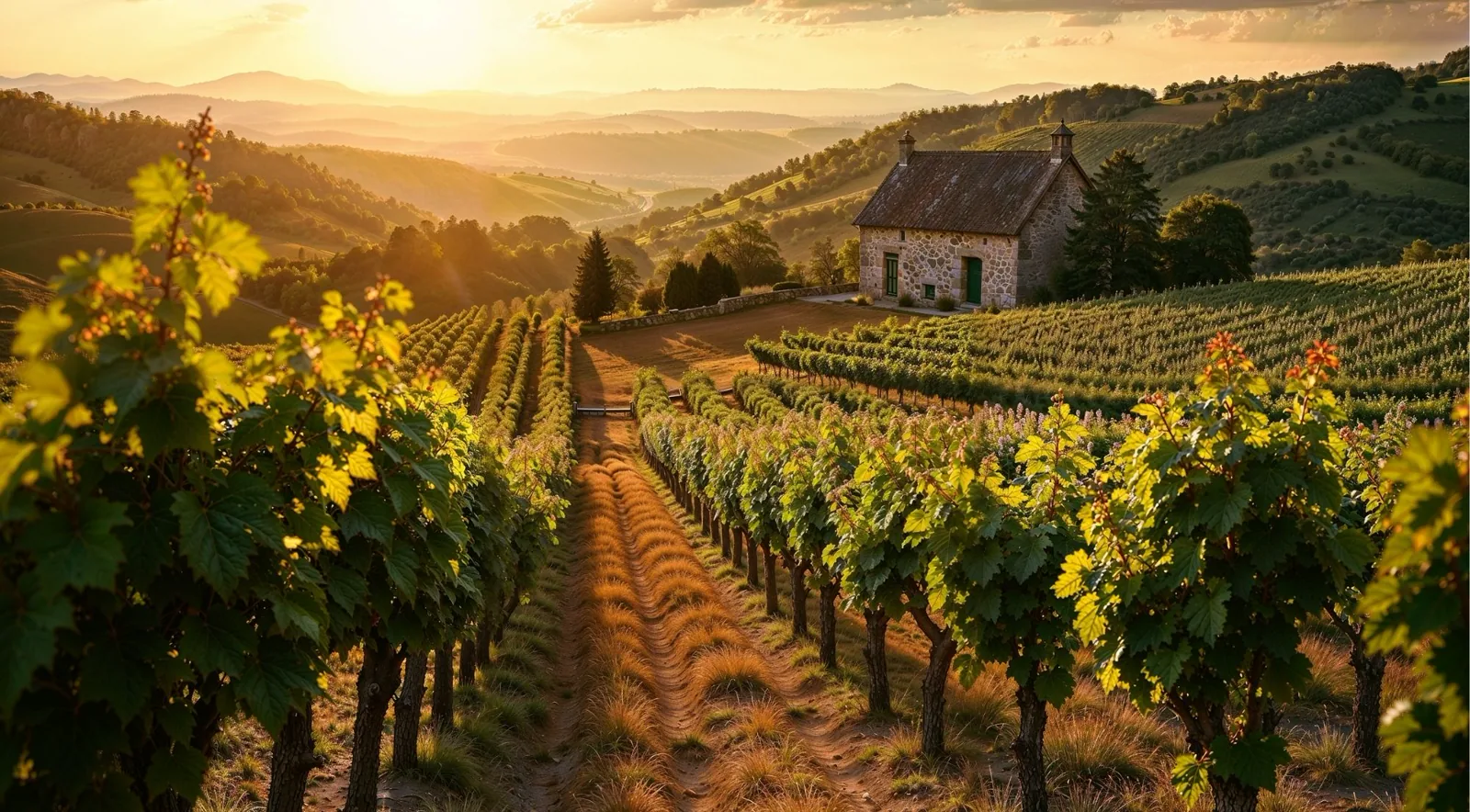
If wine is the main reason for your Tuscany trip, don't automatically stay in Florence. For a first wine-focused trip, base yourself in Chianti Classico, around Panzano, Radda or Castellina, and you'll have wineries, vineyard restaurants and Sangiovese country outside your door. Choose Florence if you don't want to drive, Siena if you want to explore several wine regions, or Montalcino if Brunello is the reason you're coming.
The biggest planning mistake is treating Tuscany as one wine region. It isn't. Chianti Classico, Brunello, Vino Nobile, Vernaccia and the Super Tuscans each have their own home, and the right base depends on whether you want convenience, time among the vineyards or access to several regions.
If someone asked us, "We're coming to Tuscany mainly for wine. Where should we sleep?", our default answer would be Chianti Classico. Look around Panzano, Radda, Castellina, Greve and Gaiole. The big advantage is simple: you wake up inside the vineyards instead of commuting to them.
Most travellers are choosing between two kinds of base:
For many wine trips the answer is both: a few nights of city culture, then a few nights slowing down at a wine estate. Tuscany is large, and the right base puts you minutes from good cellars, while the wrong one loses you hours in the car.
Wherever you sleep, a guided day is the easiest way to taste without driving: Chianti Classico wine tours from Florence and Siena, Brunello di Montalcino tastings, Montepulciano cellar tours, Vernaccia in San Gimignano and Super Tuscan wineries in Bolgheri. Browse related Tuscany wine experiences below.
| Base | Best for | Car? | Verdict |
|---|---|---|---|
| Panzano / Radda / Castellina | Chianti Classico | Strongly recommended | Best immersive wine stay |
| Siena | Chianti, Brunello and Vino Nobile | No | Best strategic base |
| Florence | Organised Chianti tours | No | Best without a car |
| Montalcino | Brunello | Yes | Best for serious wine lovers |
| Montepulciano | Vino Nobile and the Val d'Orcia | Yes, for the wineries | Best wine and town combination |
| Pienza / Val d'Orcia | Romance and scenery | Yes | Best landscapes |
| San Gimignano | Vernaccia and Chianti | Helpful | Best for white wine |
| Bolgheri | Super Tuscans | Yes | Specialist wine trip |
These are slightly different trips, and they point to different bases.
Stay in:
Chianti is the classic heart of Tuscan wine country, between Florence and Siena, and the classic first-timer's countryside base. Each village suits a different kind of stay.
Best for couples, food and wine, boutique wineries and stays of two or three nights. The appeal is that wine becomes part of the rhythm of the day rather than a packaged excursion. See places to stay in Panzano.
Choose Radda if you want quieter evenings, a strong wine-country atmosphere and access to the estates around Gaiole, Castellina and Radda, and you're less concerned about being near Florence. See places to stay in Radda.
Castellina is perhaps the most practical Chianti base, because it sits between Florence-side Chianti and Siena. It is especially useful on a route that runs Florence, Chianti, then Siena or the Val d'Orcia. Our Castellina in Chianti guide covers the town and its wineries. See places to stay in Castellina.
Greve has the most services and suits short wine stays, first-time drivers, restaurants and shops, and travellers mixing Florence with wine country. For atmosphere we'd choose Panzano; for convenience, Greve. The Greve in Chianti guide has the wineries in and around town. See places to stay in Greve.
Gaiole sits among historic estates in the southeast of Chianti Classico, and works for the same kind of quiet stay as Radda. See places to stay in Gaiole.
If a visit to Antinori nel Chianti Classico is a priority, stay around San Casciano or northern Chianti for proximity, or Greve or Panzano for a larger wine-country trip. Antinori is booked directly with the estate; our most beautiful winery guide explains the visit. See places to stay in San Casciano.
Not driving from a Chianti base? A Chianti and castles tour from Siena or a small-group Chianti tasting from Florence covers the wineries for you.
Siena is arguably the best single base if you want to taste in several regions. It sits at the edge of Chianti and within reach of Montalcino and Montepulciano, a walkable, often more affordable city that's deeper into wine country than Florence. You don't need a car to stay here: you can build your days around guided tours and come back each evening to a real city with restaurants and evening atmosphere.
Choose Chianti for vineyards outside the bedroom window. Choose Siena for better access to several wine regions. Our wine tours from Siena guide compares the days out. See places to stay in Siena.
Florence is not the best place to feel as if you're staying in wine country, but it is the easiest place to join wine tours. It is Tuscany's transport hub: you can reach every region by day tour, train or bus, with Chianti's vineyards about 45 minutes away. The least immersive base, and the most convenient.
Stay in Florence if:
If you're taking three wine tours on consecutive days, move into the countryside. For a single day, a half-day Chianti winery tour from Florence is the simplest choice; our wine tours from Florence guide compares the rest. See places to stay in Florence.
If Brunello is why you're coming, stay in Montalcino. The trip becomes breakfast, Brunello, lunch, Brunello, sunset, instead of Florence, a long drive, a winery, lunch, another winery and a long drive back. The Montalcino and Val d'Orcia area is more rugged and more exclusive, and deeply rewarding for serious red lovers. See our Brunello di Montalcino guide.
From a room in town, a Brunello tasting with lunch in a castle near Montalcino fills a day without a drive from Florence. See places to stay in Montalcino.
Pienza is not the best wine town, but it may be the best base if you want wine, scenery, romance, food and easy access to several towns: the UNESCO-listed Val d'Orcia is on the doorstep. Choose Montalcino if the wine wins, and Pienza if the overall countryside experience wins. The Val d'Orcia wine tours guide covers the tastings nearby. See places to stay in Pienza.
Montepulciano has a major advantage: tasting is woven into the town itself. Its historic underground cellars mean you can spend some of your wine time walking rather than driving, and the Vino Nobile is good value. It suits couples, Vino Nobile, restaurants on foot, and exploring the Val d'Orcia and the Valdichiana. A Montepulciano cellar tour and tasting starts in town. See our Montepulciano wine guide. See places to stay in Montepulciano.
| Montalcino | Montepulciano | |
|---|---|---|
| Signature wine | Brunello | Vino Nobile |
| Wine focus | Stronger | Strong |
| In-town tasting | Good | Excellent |
| Historic centre | Small | Larger |
| Best for serious wine geeks | Montalcino | |
| Best for wine and sightseeing | Montepulciano |
In short: Montalcino for the bottle, Montepulciano for the town-and-wine combination.
Best if you prefer white wine: San Gimignano is the home of Vernaccia di San Gimignano, and a strong choice if you want wine plus a photogenic medieval town. It is an easy add-on to a Chianti or Siena trip, and a San Gimignano winery tour with a traditional meal covers the Vernaccia side. See our San Gimignano and Vernaccia guide. See places to stay in San Gimignano.
Bolgheri and the coast are a different Tuscany: Cabernet-based Super Tuscans, a cooler sea climate, beaches and far fewer crowds. It is best for people who actively seek out Sassicaia, Ornellaia, Masseto and other Cabernet-based Tuscan wines. For a first Tuscany trip, Chianti plus Montalcino is usually more useful. A Bolgheri winery tour with tasting is a short way in. See our Bolgheri and Super Tuscan guide. See places to stay in Bolgheri.
A working agricultural property with accommodation, often a farm or vineyard, with home cooking and on-site tastings. Roughly $85–220/night, rural, so you'll need a car.
Higher-end properties attached to a wine estate, boutique to full luxury, with cellar tours and vineyard views. ~$220–$1,500+/night.
A relais is usually boutique or luxury: restored castles, villas and hamlets turned high-end hotels, often with spas and fine dining. ~$330–$1,600+/night.
The choice for groups and families: a whole farmhouse or estate, often with a pool. Frequently a 7-night minimum.
In the wine towns or cities: best for walkability, dining on foot and car-free travel. The widest price range.
The most practical feature to look for: a restaurant on site, or dinner within walking distance.
Best for vineyards at sunrise, silence, a pool, romance and the countryside. The downside is driving.
Best for restaurants on foot, wine bars, evening life and easier logistics. Strong towns: Panzano, Radda, Montalcino and Montepulciano.
A sample of notable estates where you can sleep among the vines, by region; for eleven of them compared in full, see the best vineyard hotels in Tuscany. Each link opens the property on Booking.com. For tasting itineraries at these and other producers, pair this with our best wineries to visit in Tuscany guide.
These are illustrative, not endorsements: the right place depends on your budget, group and which wine you've come for. Hotel links go to Booking.com, and we may earn a commission if you book.
For independent winery touring, usually yes. For the actual drinking, consider a driver or a tour. It depends on your base:
There's also a safety and legal point. Italy's drink-driving limits are strict and the penalties severe, which is a strong reason to let a guided tour or private driver handle your wine-region days, so everyone can taste freely and nobody risks driving. This is true whether you're based in a city or out among the vines.
Harder without a car: Radda, isolated Chianti agriturismi, the Montalcino countryside and the Bolgheri estates. If someone in your group wants to taste, tour vs self-drive sets out the trade-offs.
Whichever base you choose, this is the easiest way to taste Chianti without renting a car or staying sober to drive: round-trip coach transport from central Florence to two family wineries, with a guide handling the logistics.
A focused wine-country trip works in three to five days; a week or more lets you add a second region or the coast. Our how many days in Tuscany guide covers the whole trip, Florence included.
Three wine regions in one week is plenty.
Late September to October is the most atmospheric, with the vendemmia (harvest), golden light and thinner crowds. April to June brings green hills and mild weather. July and August are hot and busy. Book top estates and harvest-season stays months ahead. Our best time to visit for wine guide goes month by month.
If you're choosing between the southern bases, this full-day tour from Florence covers Montalcino, Pienza and Montepulciano in a single guided day, a useful way to see three of them before committing to one.
A full day through the UNESCO Val d'Orcia: a Brunello tasting in Montalcino, free time in Pienza, and a second tasting in Montepulciano. A good way to see three of this guide's countryside bases before committing to one for a future stay.
Our wine tours for couples guide pairs each of these with a day out.
The strongest bases for eating as well as drinking are Panzano and the rest of Chianti, the Val d'Orcia and Montepulciano. The Tuscan wine and food pairing guide explains what to order with what.
Montalcino.
For a first wine-focused trip:
Spend two or three nights around Panzano, Radda or Castellina, then two nights around Montalcino or Pienza.
For a first wine-focused trip, Chianti Classico, around Panzano, Radda or Castellina. Choose Florence if you don't want to drive, Siena if you want one base for several wine regions, Montalcino if Brunello is the reason you're coming, and Bolgheri for Super Tuscans.
Yes. Many estates offer accommodation, from agriturismi (working farms with rooms) to wine resorts such as Castello Banfi or Castiglion del Bosco. You can taste on site, tour the cellar and walk the vineyards before breakfast. Check whether there is a restaurant on site or within walking distance before you book.
Florence is easier: no car needed, plenty of tours, great food and art, and it suits a trip of three or four days with one wine day. The countryside is where you wake up among the vineyards, but you will need a car or a driver. If you are planning three wine days in a row, move into the countryside. Many travellers do both.
In the countryside, almost always yes: wineries and rural stays aren't reachable by public transport. In Florence or Siena, no: base there and take guided wine tours or a private driver, which also means no one has to drive after tasting.
An agriturismo is a working agricultural property, often a vineyard or olive estate, that offers accommodation, usually with home-cooked meals and sometimes on-site tastings. It is the classic, often affordable way to stay in Tuscan wine country.
Two nights is the minimum we would recommend, three is the sweet spot, and with four or five nights split your stay between two wine regions. A good first wine trip is two or three nights around Panzano, Radda or Castellina, then two nights around Montalcino or Pienza.
Panzano for atmosphere, Radda for the deepest wine-country feel, Castellina for geography (it sits between Florence-side Chianti and Siena), and Greve for easy logistics and the most services. Gaiole sits among historic estates. Siena is the city alternative if you want to taste in several regions. See our Chianti wine tours guide.
Late September to October for the harvest and golden landscapes, or April to June for green hills and mild weather. These shoulder seasons avoid the summer heat and crowds, but book well ahead, especially around harvest.
In Montalcino. Staying there turns the trip into breakfast, a Brunello estate, lunch, another estate and sunset, instead of a long drive from Florence each way. Two nights suits most people; three is excellent for serious wine travellers.
Florence first, then Siena, with Montepulciano as an interesting alternative because its historic cellars are inside the town. Radda, isolated Chianti agriturismi, the Montalcino countryside and the Bolgheri estates are hard without a car.
Montalcino if the wine comes first: it is the home of Brunello and the stronger choice for serious wine lovers. Montepulciano if you want wine and sightseeing together: its historic centre is larger and you can taste in cellars inside the town.
Also worth booking
Covering the San Gimignano and Bolgheri bases from this guide, both with free cancellation up to 24 hours before.
Free time among San Gimignano's towers, a Chianti winery tasting and lunch, and a guided walk through Siena: a full sample of that base before you decide to stay there next time.
A family-run winery a short drive from Bolgheri village, a low-commitment way to sample the coastal base before booking a longer coastal stay.
All tours and live availability via GetYourGuide. Listed prices are starting prices in USD; final price varies by date and group size.
Choose your base, then book the wine days: guided tours and tastings with transport included, whichever region you're sleeping in. Free cancellation up to 24 hours before.
Affiliate partner of GetYourGuide and, for hotels, Booking.com via Stay22. The commission does not affect the price you pay.