Harvest & seasonsWeather & crowdsMonth by month2026 pricesUpdated 11 min read
Best Time to Visit Tuscany for Wine: Why Late September Is Best for the Harvest
The Tuscan grape harvest lasts for weeks rather than a single weekend, and a Tuscany wine tour looks very different in February, when the vines are bare, than it does in June or during the September harvest. This guide says what each month gives you, and lets you check the conditions for the date you are actually thinking about.
Already have dates in mind? Put them into the date checker below — it says where they fall in the harvest, what the conditions are, and which of the tours suits them.
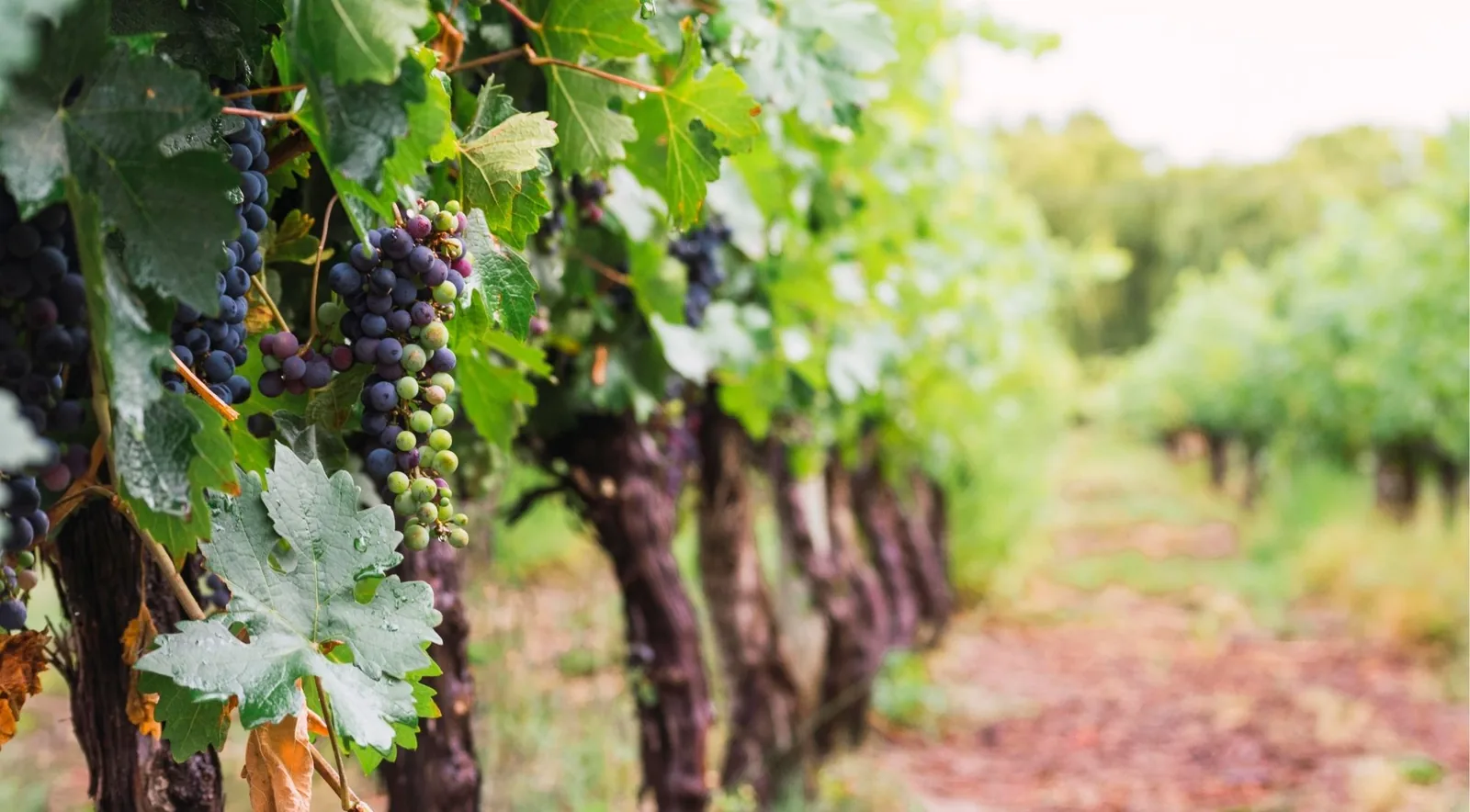
Veraison, in the last ten days of August: over a week or two the red grapes turn from green through pink to deep purple. Sangiovese is picked about a month later, mainly in the second half of September.
The one-line answer
Tuscany wine tours are available year-round, although the full-day trips into the hills run on far fewer days in December, January and February than they do from April to October. What changes most is where your date falls in the vineyard year. Bare pruned rows in February, full leaf in June and picking in late September are three different days out.
If your dates are flexible and you have come for the harvest, aim for late September into the first days of October. That is usually when Sangiovese — the grape behind Chianti Classico, Brunello and Vino Nobile — is being picked, so the cellars are working while you are standing in them. If you can only pick one week, make it the last week of September, though picking shifts with the vintage and is settled only weeks ahead. It is also one of the busiest months of the year here, so book early.
If the harvest is not the point, other months are better. June has the longest days of the year and the vines in full leaf, and May is cooler with nearly as much daylight. In July and August, start in the morning: afternoon highs average above 32.2°C. October is much quieter across the region, and the leaves usually turn in the second half of it. December to March gives you the cellars and nobody rushing you (see what Tuscany is like in winter).
Check availability — Florence: Great Chianti Wine and Olive Oil Trail with Lunch
Pоwered by
Tuscany pours wine all year, and there are few months when a winery day does not work. What changes is what you can watch happening in the vineyard, how much daylight you have to spend on it, how hot the middle of the day gets, and how many other people had the same thought. Those four things do not peak together, which is the whole reason the question has a real answer.
Getting a tour at all is less of a constraint than the season makes it sound. We counted the bookable dates on all ten tours this page routes to, and not one has a month with nothing in it. The half-day runs into Chianti and the tastings in Florence itself are open every day of the year. What thins in midwinter is the long day out: three tours that run daily in May are down to between eight and thirteen days in January, so the choice narrows to whoever is still driving into the hills that week.
Every figure here comes from the Italian met service, the national statistics office or the Chianti Classico growers’ body, and the sources at the foot of this page name each one. Where we do not have the data — what a tour costs on a particular date, which estates let you join the picking — the page says so instead of guessing. If you have not chosen a format yet, start with the Tuscany wine tours guide; for Chianti specifically, the Chianti tours guide.
Start here
Check your dates
Put in the date you are thinking about. The card returns where it falls in the
harvest, what the conditions are, and which of the tours below suits it. Close to
today it shows the actual forecast for that day and says so; further out it shows what
the month is usually like instead, and says that too. Those are different things and the
card keeps them apart.
Showing a typical September — what an
average year looks like, not a forecast.
Sangiovese is being picked
This is the core of the Chianti Classico,
Brunello and Vino Nobile harvest. Cellars are working, and so are the people
in them.
Average high27.1°C
Rain, whole month73.7 mm
Days with rain6.6
Daylight12h 33m
Visitors vs August62%
For these dates we would book
a Chianti day with lunch that takes in an olive oil mill as well as the
wineries, while the picking is under way.
Harvest dates move with the vintage and are settled only a few
weeks ahead, so the harvest line is a window, not a promise. Availability for
a specific date is whatever the calendar says.
Other experiences around Florence and Siena
Beyond the wine estates, the same days out take in Siena, San Gimignano and the
Val d’Orcia. The widget below surfaces live availability across Tuscany.
What you will actually see
The vineyard year, month by month
Rain and visitor figures tell you how comfortable a month will be. They do not tell
you what the hillsides look like, and on a wine trip that is usually the thing people
are picturing before they book. The vine runs the same cycle every year, give or take a
week or two, and the Chianti Classico growers publish the stages.
December to March: bare vines
The vines are cut back to a couple of buds and you can see the shape of the place
— the rows, the posts, the way the hills fold. Pruning crews work through the cold
months. Around March the roots start pulling water again and the fresh cuts bleed sap, a
stage the growers call the weeping. There is still nothing green on the wire, so this is
the season when a trip is about cellars, fires and long lunches rather than the view.
April: the first leaves
Sangiovese buds open in roughly the first ten days of April, and the first small
leaves appear. Over the following two or three weeks the hillsides shift from bare brown
to a thin green haze. Nothing else in the vineyard year changes this quickly.
May and June: full leaf, then flowering and fruit
The canopy fills out through May, and in the last ten days of the month the vines
flower — small, greenish and easy to walk straight past, with a faint scent if you
get close. The growers call this a delicate stage, and it is: heavy rain or a late frost
now costs fruit in September. By June the flowers have set into hard green berries about the
size of a peppercorn. The vines are in full leaf from now until the fruit changes
colour in late August.
July and August: swelling, then the colour change
Berries fill out through July under the hottest weather of the year. Then in the last
ten days of August comes the change growers call veraison: over a week or two the red
grapes turn from green through pink to deep purple. It is the one obvious colour change before
harvest, and the difference between a mid-August visitor seeing green fruit and a
September one seeing dark fruit.
September to mid-October: the picking
This is the loud part of the year. Tractors and trailers on the small roads, crates
stacked in the yards, cellar doors open, and the smell of fermenting must everywhere.
Whites and the international varieties come in first, from around the middle of August;
Sangiovese follows through the second half of September and runs on to about the middle
of October in the cooler, higher parcels.
Late October and November: leaf colour, then the olives
Once the fruit is off, the leaves turn yellow, gold and red before they drop —
usually through the second half of October and into November, which is the short window
when the vineyards are as much about the colour as the wine. The olive harvest follows the
grapes through November, which is why estates that press their own oil sell a different
kind of day out that month.
These are typical stages, not a schedule. The vine responds to
the season, so budbreak, flowering and picking all move by a week or two from year to
year, and the higher, cooler sites run behind the warmer ones on the same estate.
The year in one table
What each month is best for
Rain is the total for the whole month and the next column is how many days it
actually falls on, which is the more useful of the two for planning a day out. The
visitor column is how busy the region is compared with August, its busiest month, so 100
is as crowded as Tuscany gets and February is as quiet.
Tuscany month by month: temperature, rainfall, days with
rain, daylight, visitor level and what is happening in the vineyard
Month
Avg high
Rain
Rain days
Daylight
Visitors
In the vineyard
January
11.2°C
64.5 mm
8.0
9h 16m
14
Cellar season
February
12.7°C
64.3 mm
7.3
10h 29m
14
Cellar season
March
16.3°C
61.9 mm
7.1
11h 52m
21
Cellar season
April
19.9°C
67.4 mm
8.6
13h 25m
37
Vines budding
May
24.5°C
65.9 mm
7.8
14h 43m
48
Flowering
June
29.1°C
47.9 mm
5.3
15h 26m
67
Fruit set
July
32.2°C
26.2 mm
3.0
15h 09m
91
Ripening
August
32.5°C
39.9 mm
3.8
14h 02m
100
Whites picked from mid-month
September
27.1°C
73.7 mm
6.6
12h 33m
62
Sangiovese, second half
October
21.6°C
103.7 mm
8.6
11h 04m
37
Tail of harvest, then olives
November
15.7°C
117.8 mm
10.4
9h 41m
18
Olive harvest
December
11.4°C
87.8 mm
9.6
8h 57m
17
Cellar season
Three things in that table matter before you choose.
September is busy. It is the fourth busiest month of the year, at
62% of the August peak against May’s 48% and October’s 37%. If you are
going for the harvest, go for the harvest — not for a quiet vineyard.
The wet season starts earlier than people expect. October takes
103.7 mm across the month and November 117.8 mm, against June’s 47.9 mm. Autumn in
Tuscany is genuinely wet, and it arrives while the last grapes are still coming in.
The driest months are the hottest ones. July averages 26.2 mm over
3.0 days with rain, which is the driest stretch of the year by a distance, and also
the one where an afternoon outdoors at 32.2°C is hard work.
The decision
Which tour fits your month
Five formats, matched to what the month you are travelling in actually gives you.
Prices are starting prices and ratings were live-checked on October 2, 2026; both move, and the
booking page is the truth.
If you are coming for the harvest
Florence: Great Chianti Wine and Olive Oil Trail with Lunch
About five hours through Chianti with lunch. Any Chianti tour in late September passes estates in the middle of the picking; this one adds an olive oil mill, which is what November is really about. Some recent guests visited two wineries rather than three, and there is a 5pm departure that swaps lunch for dinner, so check which one you are booking.
From Florence: Tuscany Wine & Food Tour with Guide
From May to July you get roughly fifteen hours of daylight, which makes the case for a food-led full day rather than a half day. You are paying for hours you can actually use.
If you are here in the heat, or want a small group
From Florence: Small Group Wine Tasting Tour to Tuscany
August averages a daily high of 32.5°C and is the busiest month of the year. A small group with an early start is the version of this that works, and the highest-rated option here.
The half-day from Florence is the most-reviewed wine tour on this site by a wide margin, and the sane choice if Tuscany is one day of a longer Italian trip.
Florence: Seven Types of Tuscan Wine, Tasting & Food Pairing
November averages 10.4 days with rain and January gives you 9h 16m of daylight. Neither is a good case for a day in the hills, and both are a good case for a couple of hours of structured tasting indoors in Florence.
All tours and live availability via GetYourGuide.
Listed prices are starting prices in USD; the final price varies by date and group
size.
The vendemmia
When the harvest actually happens
The single most common thing to get wrong about a Tuscan wine trip is treating the
vendemmia as an event with a date. It is a sequence, it runs about eight weeks, and
the grape you have come to see is picked in the back half of it.
The white grapes and the international varieties — Chardonnay, Merlot,
Pinot — come in first, from around the second week of August. Producers in
Chianti Classico reported white grapes arriving at the winery from 12 August in the
2024 vintage. Sangiovese, which is the grape behind Chianti Classico, Brunello di
Montalcino and Vino Nobile di Montepulciano, follows several weeks later: in 2025 the
Chianti Classico picking ran from around the 10th to the 20th of September and
finished in late September and the first days of October. In 2023 it began around
20 September and closed in the first ten days of October, which the Consorzio
described as a return to traditional timing.
That order is what tells you when each region is working, because the regions
differ by what is planted in them. Chianti Classico,
Montalcino and Montepulciano are all Sangiovese
denominations, so all three run on the window above and are busiest in the back half
of September. Bolgheri on the coast is planted with Cabernet, Merlot
and Petit Verdot, which are among the varieties that come in earlier.
San Gimignano’s Vernaccia is a white, and the whites are picked
before the reds around them. We have dated windows only for Chianti Classico, so treat
the rest as the order of events instead of a calendar.
Altitude spreads it further. The warmer, lower parcels come in first and the
cooler, higher ones can be a fortnight behind, so on the same estate in the same week
you can find one block picked and another still hanging.
What that means for choosing dates is narrower than it sounds. Arriving in the
first week of September puts you in a working winery, but what is being processed is
white and international fruit. If you specifically want to see Sangiovese picked and
crushed, the second half of September into the first days of October is the window,
and that is the one part of the year where the thing you came for and the thing
happening in front of you are the same thing.
Two limits. Harvest dates move with the vintage by a week or more in either
direction, and they are only settled a few weeks ahead, once the fruit decides. And a
winery mid-vendemmia is a workplace: the tasting may be shorter, the cellar may be
partly closed, and the person who would normally walk you round is on a sorting table.
That is what you give up to see it happen, and a swap to make on purpose,
not by accident.
Behind the grapes come the olives. The Tuscan olive harvest runs through November,
which is why the estates that press their own oil sell a different day out that month.
We give it one line here; this page does not pretend to cover it.
Measured, not assumed
How crowded Tuscany really is
September is often described as shoulder season, but Tuscany behaves differently.
Here is how many nights people actually spend in Tuscan accommodation in an average
month:
Nights spent in Tuscan accommodation by month, three-year
mean 2023 to 2025
Month
Nights spent
Share of the year
August
9,348,103
19.0%
July
8,531,911
17.3%
June
6,280,945
12.8%
September
5,832,616
11.8%
May
4,527,613
9.2%
October
3,463,025
7.0%
April
3,433,594
7.0%
March
1,985,333
4.0%
November
1,690,158
3.4%
December
1,551,498
3.2%
January
1,301,597
2.6%
February
1,292,275
2.6%
September runs about 29% busier than May, not quieter, and it is the fourth
busiest month of the year. So late September is a good month to go and a poor month to
expect solitude: book the winery day ahead, and take a small group if you would rather
not share a tasting room with a coach party. (About 5.8 million nights against May’s 4.5 million;
the table has the exact figures.)
The month where the numbers genuinely fall is October, at about 3.5 million — about 41%
below September. That is the trade this page turns on: October gives you a quieter
region and costs you most of the Sangiovese picking, plus 103.7 mm of rain against
September’s 73.7 mm. If crowds matter more to you than seeing the harvest, take
October and know what you are giving up. January and February are quieter still, at about 1.3 million and 1.3 million,
and that is cellar-tasting weather, not vineyard weather.
What this measure is and is not. It counts overnight stays across
the whole region. It does not count day trippers, it does not count people based in
Florence who drive out to a winery and back, and it says nothing about how many people
will be in the tasting room with you. Read it as the shape of the year, not as a
promise about your afternoon.
Reading the numbers
What the rainfall figures do and do not say
This page leans on rainfall, so let us be exact about what 73.7 mm in
September means. It is the total depth of rain across the whole month
in an average year. It is not a daily rate, and it is not a forecast for your trip.
On its own that number hides the thing you actually want to know, which is how many
days it rains. That is why the table carries both. September averages 73.7 mm over 6.6
days with rain; October takes 103.7 mm over 8.6 days. So October is not simply
“wetter” in a vague way — it rains on about two more days, and each
of those days carries more water.
Put plainly: an average October delivers about 2.2 times the rain of an average
June, spread across roughly three more days with rain. What the
figures do not tell you is how long any of it lasted, whether it fell overnight, or
what your odds are of a dry afternoon on a particular date. A month with one storm and
a month with three drizzling weeks can total the same.
For a wine trip the practical reading is narrow and useful. Rain rarely cancels a
Tuscan wine day, because the tasting is indoors and the driving is done for you. What
it changes is the part you were probably looking forward to — the walk through
the vines, lunch on a terrace, the view down the valley. A wet forecast is a reason to
pick a tour built around cellars and a table, not a reason to give up the day.
What you can fit in a day
Daylight, and whether a full day pays
Daylight decides what you should book, not just what the weather is like.
Florence gets 15h 26m in mid-June and 8h 57m in mid-December — a swing of about six and a
half hours. A twelve-hour itinerary in a nine-hour day is scenery you have paid for
and cannot see.
From May to July, at 14h 43m to 15h 09m, a full day genuinely works: two estates, a long
lunch and the drive back through the hills with light still on them. By late October
you are down to 11h 04m and by December 8h 57m, and the same money spent on a half-day or a
city tasting gets you more of what you came for. Late September, at 12h 33m, still
comfortably carries a full day — another reason that window holds up.
Tuscany is a long way south of the latitudes that get lingering northern
twilights. Once the sun is down the light goes quickly, so an itinerary that ends with a
view is one to schedule earlier in the day than you might at home.
Frequently asked
Frequently asked
When is the grape harvest in Tuscany?
It is a window of roughly eight weeks, not a single date. The white grapes and the international varieties come in from around the second week of August. Sangiovese — the grape behind Chianti Classico, Brunello di Montalcino and Vino Nobile di Montepulciano — is picked mainly in the second half of September, finishing in the first days of October in the cooler and higher parcels. The dates move with the vintage by a week or more in either direction and are only settled a few weeks ahead, so no guide can promise you picking on a particular day.
Is September a good time to visit Tuscany for wine?
Yes, and if you have come for the harvest it has the strongest case of any month, provided your dates are open. The second half of September is when Sangiovese is actually being picked, daily highs average around 27.1°C, and you still get 12h 33m of daylight to spend outdoors. The catch is that it is not quiet: September is the fourth busiest month of the year in Tuscany, so book the winery day ahead.
Is Tuscany crowded in September?
More than its reputation suggests. On overnight stays across the region, September runs about 29% busier than May, not quieter, and it is the fourth busiest month of the year, though still well short of the August peak. If you want the harvest and a real drop in numbers, the first half of October is the better trade: it is roughly a third quieter than September, but most of the Sangiovese is picked by then.
What is the best month for weather in Tuscany?
For warm and dry together, June and July. June averages 47.9 mm of rain over about 5.3 days, and July only 26.2 mm over 3.0 days, against 73.7 mm in September and 103.7 mm in October. July is the hotter of the two, averaging a daily high of 32.2°C against June's 29.1°C, which is why July tours tend to start early and put the middle of the day in a cellar.
Can you join in the grape picking on a wine tour?
Some estates run hands-on harvest mornings and many do not, and which ones offer it changes from vintage to vintage, because it depends on how the picking is going that week. We have no reliable list. Rather than name estates that may not be running it, we would point you at the availability calendar, which shows what is genuinely bookable on your dates.
Is Tuscany still green in September?
Partly. The vineyards stay green and leafy through the harvest and turn colour later, through October and into November. The open countryside between them is a different matter: the wheat and sunflower fields are cut by late summer, so the rolling green picture most people have in mind is a May and June scene, not a September one.
Which month is cheapest for a Tuscany wine tour?
We cannot answer that honestly. The tour prices on this page are starting prices, and we have no per-date fares for Tuscan wine tours, so we have no basis for calling one month cheaper than another. What is measurable is demand: January and February are the emptiest months of the year by a wide margin, and accommodation, not the tour, is usually where that shows up.
When do the vineyards turn green, and when do the leaves turn?
The first leaves open in roughly the first ten days of April, and the hillsides go from bare to green over the following two or three weeks. The vineyards are at their greenest in June. The red grapes change colour in the last ten days of August, and the leaves themselves turn yellow and gold after the picking, usually through the second half of October and into November. These stages shift by a week or two from year to year, and the cooler, higher sites always run a little behind the warmer ones.
Do the wineries close in winter?
Wine tours run through the winter from Florence and Siena, and cellar tastings are the format that suits it: January gives you only 9h 16m of daylight and rain on about 8.0 days of the month, which is a poor case for a long day outdoors and a good one for a couple of hours underground. Individual estates set their own winter hours and some of the smaller ones do close, so check the calendar for your dates instead of assuming either way.
Sources
How we know this
Every figure on this page comes from one of five places, and this section names all
of them so you can check any of it.
Temperature, rainfall and days with rain. Firenze Peretola (LIRQ), 43.80N 11.20E, 40 m. Servizio Meteorologico dell'Aeronautica Militare, and
published by Consorzio LaMMA, the
regional meteorological service run by Regione Toscana and the CNR. Reference period
1991-2020 (current WMO reference period). These are station observations, not a modelled grid.
Visitor numbers. ISTAT, Nights spent in collective accommodation (presenze), Toscana, monthly series. We use a
three-year mean for 2023 to 2025 across all accommodation types and all countries
of residence.
Daylight. Computed for Florence at 43.770°N using the NOAA
solar-position algorithm, mid-month, rounded to the minute. Computed, not
observed.
Harvest timing. Vendemmia reports from the
Consorzio
Vino Chianti Classico, plus producer and trade reports for the 2024 and 2025
vintages.
The vine’s stages — weeping, budbreak, flowering,
veraison and ripening, with the ten-day window given for each — from the
Consorzio Vino Chianti Classico’s own published phenology for Sangiovese.
Tour prices, ratings, review counts and durations. Live-checked
on GetYourGuide on October 2, 2026. Review counts are each activity’s own; where a listing
showed only its operator’s pooled rating across other tours, we left it off
this page instead of quoting a number that is not about the tour you would book.
Which dates are bookable. Counted on September 12, 2026 from the calendar each
activity page publishes for the twelve months ahead, for all ten tours this page
routes to. It counts days offered, not departures or seats.
What these numbers cannot tell you
Climate normals are thirty-year averages. They describe a typical year and they
are not a forecast for your dates.
Monthly rainfall totals say nothing about how long rain lasted or your odds of a
dry afternoon on a given day.
Nights spent are a regional proxy for pressure. They are not a count of people
at any winery, and they miss day trippers entirely.
We have no per-date fare series, so this page does not name a cheapest month.
Harvest dates move with the vintage and are settled only weeks ahead. The windows
here are typical, not scheduled.
The growers publish the vine’s stages up to ripening but do not date leaf
fall, so the autumn colour window on this page is the general pattern rather than a
published date.
Only Chianti Classico publishes a dated harvest calendar. What this page says
about Montalcino, Montepulciano, Bolgheri and San Gimignano follows from the grapes
planted in each, not from harvest dates those consortia have published.
We have no reliable list of which estates run hands-on picking, so we do not name
any. The availability calendar knows what is bookable; we do not.
Prices and review counts move. Both were correct on October 2, 2026 and the booking page is
the truth.
A bookable-days count is a snapshot of what was loaded for sale on the day we
looked, and operators open later months as they go. One tour here lists nothing
after December because next year has not opened yet, which is a selling horizon
rather than a season ending, and it is left out of the winter comparison.
Page published and last reviewed October 3, 2026.
Pick your dates
Late September into early October, if you get to choose
Sangiovese in the fermenters, 27.1°C, 12h 33m of daylight, and a region that has come
down off its August peak. If your dates are fixed instead, the month table above says
what yours gives you — there is no month here without a good version of this
day.
Free cancellation up to 24 hours before every tour
Mobile voucher and instant confirmation
Harvest windows move with the vintage — the calendar has the real dates