Chianti Classico9 townsSR222 Chiantigiana1 & 2-day routesUpdated 10 min read
Chianti Wine Region Guide: Towns, Wineries & Wine Routes
Chianti is not one town. It is a broad wine landscape between Florence and Siena, and the single decision that improves the trip most is to choose one section of the region per day.
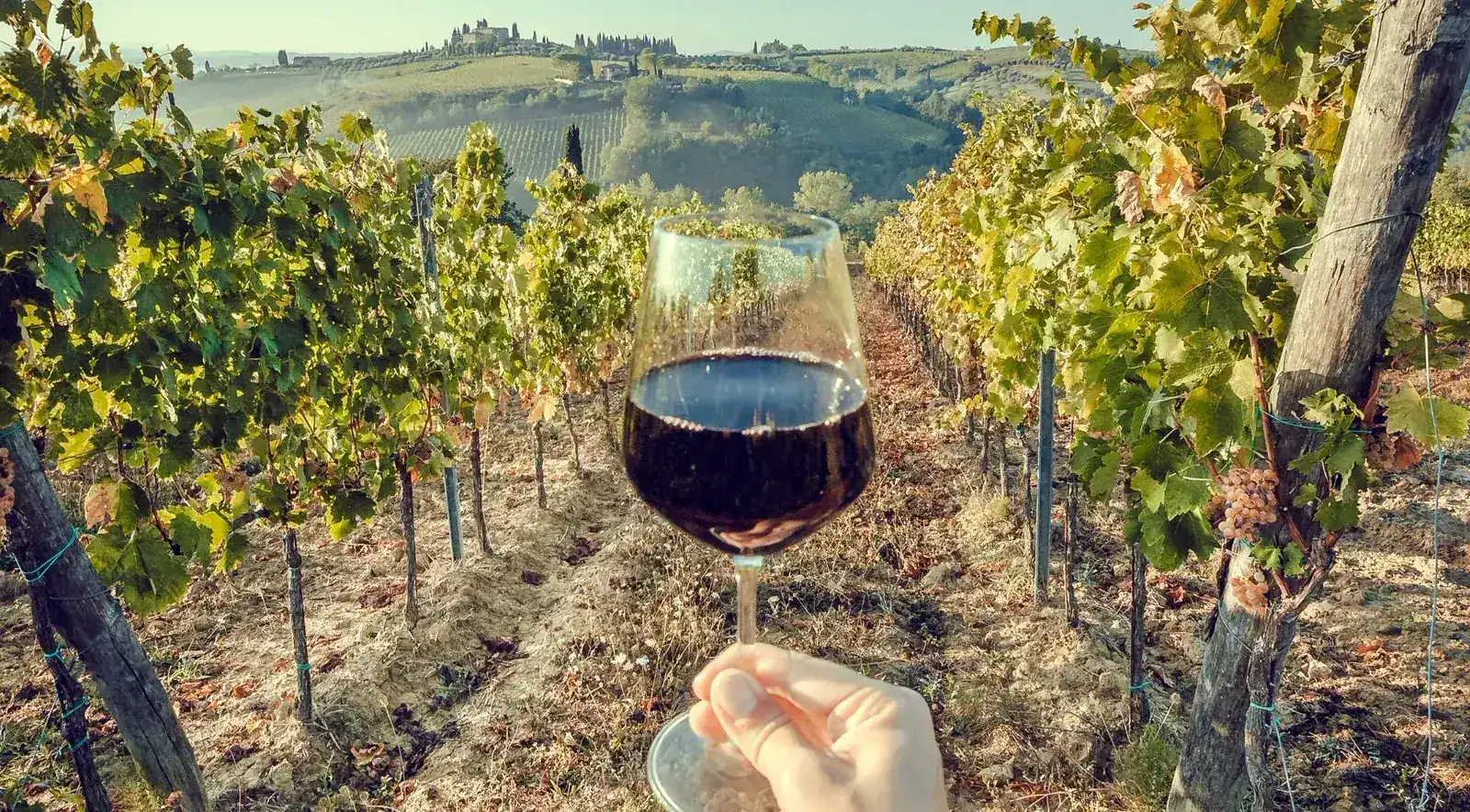
The Chianti Classico zone near Greve — the stretch of the SR222 most first-time visitors should start with.
For a first visit from Florence, follow the SR222 through Greve, Panzano and Castellina. If you have more time, add Radda and Gaiole. That is the whole strategy — everything below is detail on how to execute it.
Check availability — Florence: Chianti Wineries Tour with Wine Tasting
Pоwered by
The one rule
Do not try to collect villages. Chianti improves dramatically when you slow down — two wineries and a couple of towns in one section of the zone beats five towns strung along the whole road.
Start here
The nine Chianti towns
Nine places genuinely earn a stop. They are not interchangeable — each one suits a different kind of day.
The Chianti road runs between two of Tuscany's great cities, so a wine day here pairs naturally with Florence, Siena, the towers of San Gimignano, and — further south — Montalcino and Montepulciano. The widget below surfaces live availability for related Tuscan wine experiences.
The SR222 Chiantigiana
The SR222 is the classic road through Chianti. A practical first route is:
The first-visit axis
Florence → Greve → Panzano → Castellina → Siena
Do not confuse this with a requirement to drive the entire road in one day. The route is most enjoyable when broken into sections, and the version of this trip people regret is always the one that tried to cover all of it before dinner.
Which town, and what for
Greve The easiest introduction
Greve is the easiest introduction from Florence. It has restaurants, wine shops and good access to surrounding estates. Use it as a half-day destination, a lunch stop, or a base for nearby wineries.
Panzano is one of the strongest places for a wine-focused day. The surrounding vineyards contain highly regarded producers, and the landscape feels more rural than Greve. It is also one of the named UGAs, so the label tells you where you stood.
Montefioralle Tiny medieval village
A walled hamlet just above Greve — small enough to walk in twenty minutes, and the best short detour on the northern stretch of the road.
Lamole High-elevation vineyards
Worth the climb for the altitude: vineyards planted high above the valley, and a distinctly different expression of Sangiovese from the same denomination.
Castellina Central base
Castellina works particularly well when travelling between Florence and Siena. Its historic centre and nearby estates make it ideal for a full-day road trip rather than an out-and-back from one city. Our Castellina in Chianti guide covers the town, its wineries and an overnight plan.
Radda Overnight atmosphere
Radda is one of the best overnight bases in Chianti. It feels quieter and more central, which makes it useful for travellers spending two or three nights in wine country. See our where to stay guide for the practicalities.
Gaiole Historic estates
Gaiole is the place to prioritise if historic castles and estates matter. The surrounding area includes some of Chianti's most famous historical properties — Brolio and Badia a Coltibuono among them.
San Casciano Closest to Florence
The closest Chianti to Florence, and the natural first stop if you are short on driving time.
The southern corner of the denomination, and the obvious choice if you are approaching from Siena rather than Florence.
Montefioralle, Lamole, Panzano, Radda, Gaiole and Castelnuovo Berardenga have no bookable winery experience listed on GetYourGuide — visits there are arranged directly with the estates, or as part of a guided day from Florence or Siena.
Chianti Classico & the 11 UGAs
Chianti Classico is the historic wine zone between Florence and Siena. Its wines are based primarily on Sangiovese. A useful tasting progression:
Chianti Classico
The Annata baseline.
Riserva
Aged longer before release.
Gran Selezione
The top tier, from the estate's best fruit.
The denomination recognises 11 Additional Geographical Units (UGAs), including names such as Greve, Panzano, Radda, Gaiole and Castellina. For enthusiasts, these give you a reason to compare wines by place instead of only by producer, which is exactly the argument for spending your day in one section of the region. Our Chianti wine tours guide goes deeper on the estates themselves.
The itineraries
One-day and two-day routes
One-day route from Florence
MorningFlorence → Greve
Out along the SR222, arriving in time to walk the funnel-shaped square before the day warms up.
Late morningWinery
The first of two. Cellar walk plus a seated tasting.
LunchPanzano
The wine-focused stop, and the better of the two towns to eat in.
AfternoonSecond winery
A contrasting producer. This is where the comparison happens.
Late afternoonCastellina, or return
Carry on toward Siena, or turn back to Florence.
This is enough. A third winery does not improve the day.
Two-day route
Day 1
Greve
Panzano
Day 2
Castellina
Radda
Gaiole
Stay overnight in the region instead of returning to Florence both days. The drive back and out again costs you the best two hours of the second morning, and Radda or Castellina at night is most of the reason to give Chianti two days in the first place.
Visiting without a car
Organised tours are easiest. Public buses can reach towns such as Greve and Panzano, but rural winery hopping is much harder. The estates are spread along unnumbered roads with no service between them, and the timetable will not wait while you finish a tasting.
If nobody in your party wants to be the designated driver, a guided day solves both problems at once. Our Chianti wine tours guide compares the formats, and our tour vs self-drive guide does the arithmetic on what a self-driven day actually costs.
The most-reviewed Chianti trip from Florence — a half-day to two family wineries in the Classico zone, with Sangiovese tastings paired with pecorino, bread and estate olive oil. The simplest way to see the Greve–Panzano stretch of this guide without driving it.
Half-day from Florence into the rolling Chianti hills
Excellent for green vineyards — the landscape at its most photogenic before the summer heat.
September
Harvest atmosphere. The vendemmia is when the estates are most alive, and most booked.
October
Autumn colour and food — arguably the best month if you care as much about the table as the glass.
Winter
Quieter, but still good for cellar-focused wine travel, and the easiest time to get an appointment.
Our recommendation
For a first visit, follow the Florence → Greve → Panzano → Castellina axis and resist the urge to collect every village. Chianti improves dramatically when you slow down.
Frequently asked — the Chianti region
What is the best town in Chianti?
Greve is easiest from Florence; Radda is excellent for an overnight stay; Panzano is strong for wine enthusiasts. There is no single best town — pick by whether you want convenience, atmosphere or serious wine.
Can I drive the Chianti route in one day?
Yes, but don't try to stop everywhere. Choose two wineries and a few towns. The SR222 rewards being broken into sections instead of driven end to end in a single day.
Is Chianti Classico the same as Chianti?
No. They are separate denominations. Chianti Classico is the historic zone between Florence and Siena, marked by the black rooster seal; Chianti DOCG is the much larger outer designation. Our Chianti wine tours guide explains the tiers in full.
How many days do I need in Chianti?
One day for an introduction; two or three for a real wine-country stay. A two-day split works best: Greve and Panzano on day one, Castellina, Radda and Gaiole on day two, staying overnight in the region instead of returning to Florence both days.
Keep planning
Chianti wine tours Which tour to book
Eight tour formats compared, the seven estates worth a day, and what a strong listing should specify. Read the Chianti tours guide →
Tour vs self-drive The honest maths
What a self-driven Chianti day really costs once tasting fees and ZTL fines are counted. Compare the options →
A full day with the winery lunch this guide recommends, and the small-group format that gets you into estates coaches can't reach.
Full day with lunch
Florence: Great Chianti Wine and Olive Oil Trail with Lunch
From $100·4.86★ (293 reviews) ·Full day·Free cancel · 24h
A small-group day that pairs Chianti Classico with estate olive oil — the regional speciality most coach itineraries skip — and builds in the proper winery lunch that makes a full day worth the extra hours.
All tours and live availability via GetYourGuide. Listed prices are starting prices in USD; final price varies by date and group size.
Plan your Chianti day
One section of the region, two wineries, no rush
Follow the Florence → Greve → Panzano → Castellina axis and leave the rest of the road for next time. Every tour here is bookable in under two minutes with free cancellation up to 24 hours before.
Free cancellation up to 24 hours before every tour
Mobile voucher, instant confirmation, no printing needed
Real Chianti Classico estates, not commercial tasting rooms